
Part of: Hospital Negligence →
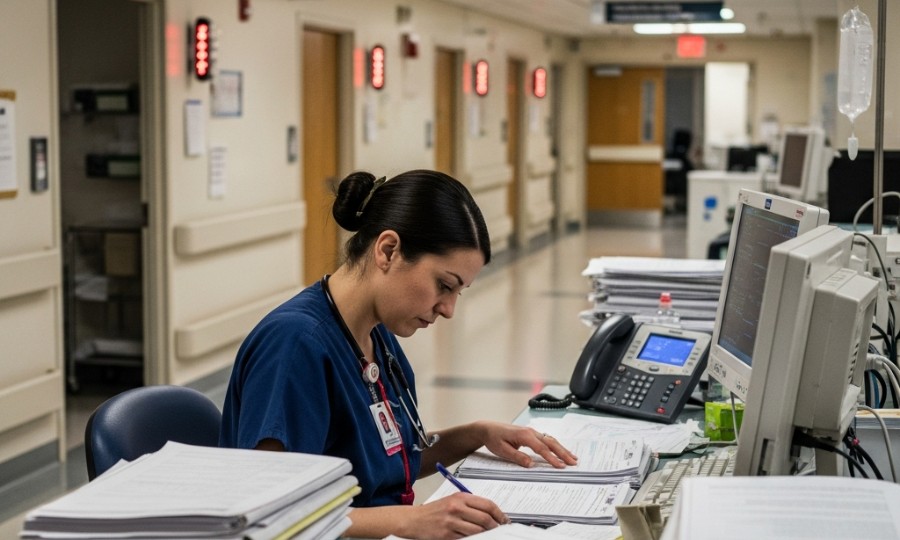
Imagine a bustling New York City hospital, a place where life-saving care is delivered daily. Now, picture that same hospital, but with fewer nurses, fewer doctors, and support staff stretched to their absolute limits. What happens then? This isn’t just a hypothetical scenario; it’s the stark reality facing countless patients and healthcare professionals across NYC, a crisis profoundly highlighted by recent nurse strikes. We’re talking about a situation where understaffing isn’t just an inconvenience; it’s a direct threat to patient safety, fueling everything from delayed care to devastating surgical errors and, in some cases, outright neglect.
The Alarming Reality of NYC’s Healthcare Understaffing
The truth is, New York City’s healthcare system is under immense pressure, and its workforce is feeling the brunt of it. For years, hospitals and nursing homes have grappled with staffing shortages, a problem exacerbated by the pandemic but rooted in deeper, systemic issues like burnout, insufficient competitive wages, and a general lack of resources. We saw this play out dramatically with the recent nurse strikes across major NYC hospitals earlier this year. Nurses, often the frontline heroes of patient care, weren’t just striking for better pay (though that’s certainly a factor); they were striking for safer patient-to-nurse ratios, arguing — quite rightly, I believe — that they simply couldn’t provide adequate care when they were being asked to do the impossible. Official data from organizations like the New York State Nurses Association (NYSNA) consistently points to these critical understaffing issues, suggesting that many facilities operate below safe staffing levels. It’s a challenging environment, to say the least.
Beyond the Headlines: How Understaffing Impacts Patient Care Directly
You might wonder, beyond the abstract numbers, how does this actually affect you or your loved ones during a hospital stay? Here’s the thing: when staff levels are critically low, the quality of care invariably suffers. We’re not talking about minor inconveniences; we’re talking about fundamental aspects of patient safety. Consider a patient recovering from surgery who needs immediate assistance with pain management or a trip to the restroom. If a single nurse is responsible for a dozen patients instead of the recommended four or five, those critical minutes can stretch into an eternity. This can lead to increased pain, higher risk of falls (a common and dangerous hospital incident), and even pressure ulcers because patients aren’t being repositioned frequently enough. It’s a domino effect, really. When staff are overwhelmed, even the most dedicated professionals can miss crucial signs of a patient’s deteriorating condition, simply because there aren’t enough eyes or hands available. This isn’t a reflection on their commitment; it’s a systemic failure. Can we really expect optimal care when nurses are juggling twice the patient load they should be?
The Dangerous Link: Understaffing and Surgical Errors
Perhaps one of the most frightening consequences of understaffing in hospitals is its undeniable link to surgical errors. Surgery is a complex, high-stakes endeavor that requires meticulous attention to detail from every member of the surgical team – from the surgeon to the anesthesiologist to the circulating nurse. When these teams are understaffed, fatigued, or rushed, the potential for catastrophic mistakes skyrockets. Studies, including those published in journals like the Journal of Patient Safety, have consistently demonstrated a correlation between inadequate nurse-to-patient ratios and adverse events, including surgical complications. Think about it: a fatigued nurse might misread a medication order, a rushed team member could overlook a critical step in the ‘time-out’ procedure before an incision, or a lack of post-operative monitoring could delay the detection of a serious infection. These aren’t just ‘oops’ moments; they can lead to wrong-site surgeries, retained surgical instruments (yes, it still happens), nerve damage, or severe post-operative infections that prolong recovery, cause permanent disability, or worse. The stakes couldn’t be higher, and yet, the system often asks our surgical teams to operate under conditions that, frankly, invite error.
A System Under Strain: Nursing Homes and the Vulnerable
It’s not just hospitals feeling the pinch; New York’s nursing homes are also profoundly impacted by understaffing, often with devastating consequences for our most vulnerable citizens – the elderly and those with disabilities. In these facilities, residents often require constant, hands-on care: assistance with feeding, bathing, medication administration, and mobility. When a nursing home is short-staffed, these essential tasks become rushed, neglected, or entirely missed. We’ve seen far too many cases where this leads to severe dehydration, malnutrition, untreated bedsores that become infected, preventable falls, and even medication errors due to hurried dispensing. The Office of the New York State Attorney General has, at times, investigated nursing homes for systemic neglect stemming directly from inadequate staffing levels. It’s truly heartbreaking to think that those who need care the most are often the ones suffering in silence because there simply aren’t enough caregivers to go around. You might be thinking this won’t work because staff members are already so dedicated, but even the most dedicated person can’t be in two places at once.
What’s Being Done (and What More is Needed)?
Given the gravity of this crisis, you might wonder what’s being done to address it. In New York, there have been efforts, notably the passage of a law in 2021 that established minimum staffing requirements for nursing homes (though many still argue these don’t go far enough or aren’t always enforced). For hospitals, discussions around mandated nurse-to-patient ratios continue to be a hot topic, often driven by union advocacy and public pressure. While some hospitals are implementing initiatives to recruit and retain staff, generally speaking, progress feels slow. The challenge is complex, involving funding, training pipelines, and the sheer demand for healthcare services in a dense urban environment like NYC. We’re seeing some movement, but are these measures truly enough to safeguard every patient? Many experts, and certainly the nurses on the front lines, would argue we need more robust legislation, stricter enforcement, and a fundamental shift in how we value our healthcare workforce.
Protecting Yourself and Your Loved Ones: Navigating the System
In the face of these challenges, what can you do to protect yourself and your loved ones? First, don’t hesitate to be an advocate. If you or a family member is hospitalized, ask questions about staffing levels and express concerns if you feel care is inadequate. You have the right to know your care plan and to expect timely, professional attention. Keep a record of interactions, including dates and times. If something feels off – if a loved one isn’t being moved, fed, or medicated on schedule – speak up immediately to a charge nurse or hospital administrator. I believe that informed patients and proactive families are often the best defense against the systemic failures that understaffing can create. It’s not fair that you should have to shoulder this burden, but in most cases, being prepared and assertive can make a significant difference in outcomes.
The staffing crisis in NYC’s hospitals and nursing homes isn’t just a political talking point; it’s a human issue with profound implications for patient safety and well-being. It fuels an environment where surgical errors become more likely and patient neglect, unfortunately, becomes a tragic reality. We all deserve a healthcare system that prioritizes safety and quality above all else. If you or someone you know has suffered harm due to suspected understaffing or medical negligence, it’s crucial to understand your rights. Consulting with a legal professional who specializes in medical malpractice can provide clarity on whether negligence occurred and what your options are. Isn’t it time we demanded better for those who care for us, and for ourselves, in our moments of greatest vulnerability? Your voice, and your vigilance, truly matter.
This article was drafted with AI assistance. Please verify all claims and information for accuracy. The content is for informational purposes only and does not constitute professional advice.
Free Case Consultation
Injured in an accident? Speak directly with an experienced NYC personal injury attorney at Rosenberg, Minc, Falkoff & Wolff. Your consultation is free, confidential, and risk-free.
No obligation • No upfront fees • You don’t pay unless we win