
Part of: Hospital Negligence →
Imagine you’re not feeling well. You visit your doctor, explain your symptoms, and leave with a diagnosis and a treatment plan. You trust that diagnosis, don’t you? Most of us do. But what if that diagnosis is wrong? What if the very process meant to help you understand your health actually leads you down the wrong path, delaying proper care or even causing harm? This isn’t a rare occurrence; it’s a silent epidemic known as diagnostic error, and its impact on patients can be absolutely devastating.
Diagnostic errors are a leading cause of patient harm and medical malpractice claims in the United States. They’re not always about a doctor making a ‘mistake’ in the traditional sense; often, they’re systemic issues, a breakdown in communication, or a missed piece of the puzzle. Understanding these errors isn’t just for healthcare professionals; it’s crucial for patients and their families too. We’re going to explore what diagnostic errors are, why they happen, and what we can all do to promote better patient safety protocols.
The Hidden Truth: How Often Do Diagnostic Errors Occur?
It’s easy to assume that with all the advancements in modern medicine, getting an accurate diagnosis is a given. The truth is, it’s far more complex. Recent reports and studies consistently show that diagnostic errors affect millions of Americans every year. Think about that for a moment: millions of people receiving an incorrect, delayed, or missed diagnosis. This isn’t just a number; it represents real people facing prolonged illness, unnecessary treatments, or even preventable death.
For instance, a significant study by the National Academies of Sciences, Engineering, and Medicine (NASEM) highlighted that most people will experience at least one diagnostic error in their lifetime. That’s a staggering statistic, isn’t it? It means you, a family member, or a close friend could easily be affected. These errors aren’t just minor missteps; they contribute to a substantial portion of serious patient harm, often more so than surgical errors or medication mistakes.
These aren’t always dramatic, easily identifiable errors. Sometimes it’s a subtle delay in diagnosing a fast-moving cancer, or a misinterpretation of lab results that leads to a patient being treated for the wrong condition for months. The financial burden alone, from unnecessary tests and treatments, is immense, not to mention the emotional toll on patients and their loved ones. It’s clear we’re dealing with a pervasive issue that demands our attention.
Understanding the ‘Why’: Common Causes of Diagnostic Mistakes
So, why do these errors happen with such alarming frequency? It’s rarely a single factor. Instead, it’s usually a confluence of issues within a complex healthcare system. You might wonder, isn’t there a checklist for everything?
Communication Breakdowns: One of the most common culprits is poor communication. This could be between a patient and their doctor (e.g., a patient not fully articulating symptoms, or a doctor not asking enough probing questions), or between different healthcare providers (e.g., a specialist not relaying critical findings to a primary care physician). Imagine a patient seen in the ER, discharged, and their follow-up test results aren’t properly communicated to their primary care doctor, leading to a critical delay in diagnosing an evolving condition.
Cognitive Biases: Doctors, like all humans, are susceptible to cognitive biases. For example, ‘anchoring bias’ might lead a physician to fixate on an initial diagnosis, even when new information suggests otherwise. Or ‘confirmation bias’ where a doctor seeks out information that confirms their initial suspicion, rather than exploring alternative possibilities. This isn’t about malice; it’s about the inherent challenges of human decision-making under pressure.
Systemic Issues: The healthcare system itself often plays a role. Overburdened physicians, short appointment times, inadequate access to patient history, or fragmented electronic health records (EHRs) can all contribute. A doctor seeing dozens of patients a day might understandably miss a subtle clue during a rushed examination. Or perhaps a patient’s medical records are scattered across different hospital systems, making it difficult to get a complete picture of their health.
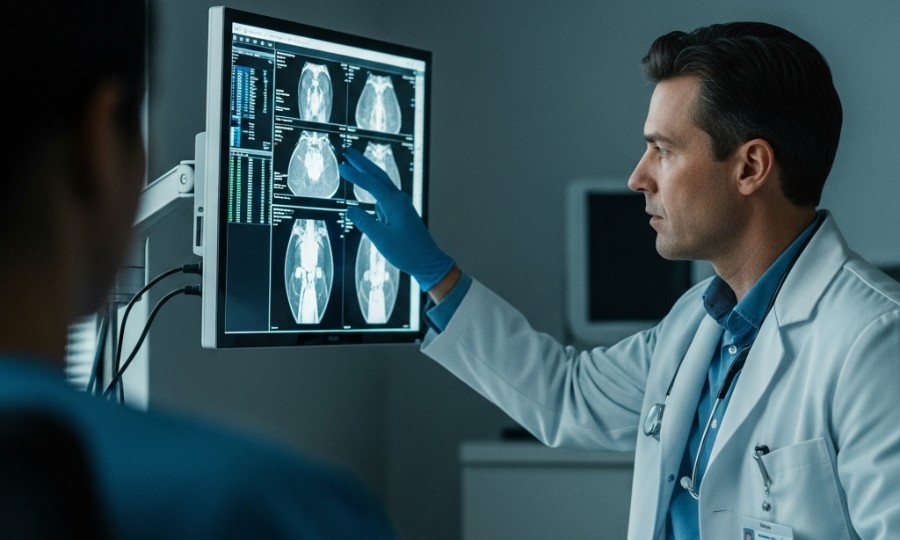
Technology and Testing Challenges: While technology has advanced significantly, it’s not foolproof. Lab errors can occur, imaging tests can be misinterpreted, or sometimes the wrong test is ordered entirely. A classic example is a patient presenting with vague abdominal pain, and instead of ordering a specific scan, a more general, less informative test is done, missing a critical issue.
Empowering Patients: Your Role in Preventing Diagnostic Errors
This information can feel overwhelming, can’t it? But here’s the thing: while healthcare systems bear primary responsibility for improving safety, patients aren’t powerless. You have a critical role to play in advocating for yourself and ensuring you receive the most accurate diagnosis possible.
Be an Active Participant: Don’t be afraid to ask questions. If something doesn’t feel right, speak up. Ask your doctor to explain their reasoning for a diagnosis or treatment plan. What are the alternatives? What are the potential risks? What’s the plan if the treatment doesn’t work?
Keep Detailed Records: Maintain your own health journal. Document symptoms, when they started, what makes them better or worse, and any medications you’re taking. Keep track of all your appointments, test results, and diagnoses. This personal record can be invaluable, especially if you see multiple providers or need a second opinion.
Seek Second Opinions: In most cases, getting a second opinion is not only acceptable but often encouraged, especially for serious or complex conditions. It’s a fundamental patient right and can provide a fresh perspective, potentially catching something that was initially missed. Don’t worry about offending your doctor; a professional will understand that you’re seeking comprehensive care.
Communicate Clearly and Completely: When you’re with your doctor, be as clear and thorough as possible about your symptoms, medical history, and lifestyle. Even seemingly minor details could be crucial. If you’re feeling rushed, politely ask for a moment to gather your thoughts. Your health is worth it.
Advancing Patient Safety: The Path Forward
Addressing diagnostic errors requires a multi-faceted approach involving healthcare providers, institutions, and policymakers. We’re seeing growing emphasis on patient safety protocols, but there’s always room for improvement.
One key area is improving diagnostic reasoning training for medical professionals, focusing on critical thinking and minimizing cognitive biases. Another is leveraging technology more effectively, not just for storing records, but for decision support tools that can flag potential diagnostic discrepancies or suggest alternative diagnoses based on patient data. Think of it as an extra layer of scrutiny.
Also, establishing a culture of safety where healthcare providers feel comfortable reporting errors without fear of punitive action is vital. When errors are reported, they can be analyzed, and lessons can be learned to prevent future occurrences. It’s about learning from what went wrong, not just assigning blame.
Ultimately, a robust healthcare system prioritizes patient safety above all else. This means fostering open communication, continuous learning, and a commitment to accuracy at every step of the diagnostic journey. As patients, we can contribute by being informed, engaged, and proactive advocates for our own health.
The journey to eradicate diagnostic errors is a long one, but it’s a journey we must take together. By understanding the problem and taking proactive steps, we can move closer to a future where every patient receives a timely and accurate diagnosis, and the devastating impact of these errors becomes a thing of the past. What steps will you take to ensure your diagnostic journey is as safe as possible?
This article was drafted with AI assistance. Please verify all claims and information for accuracy. The content is for informational purposes only and does not constitute professional advice.
Free Case ConsultationInjured in an accident? Speak directly with an experienced NYC personal injury attorney at Rosenberg, Minc, Falkoff & Wolff. Your consultation is free, confidential, and risk-free.
No obligation • No upfront fees • You don’t pay unless we win
|